
BONUS: IHEARTMEDIA LAYOFFS: HOW PRIVATE EQUITY GUTTED LOCAL RADIO
DESCRIPTION
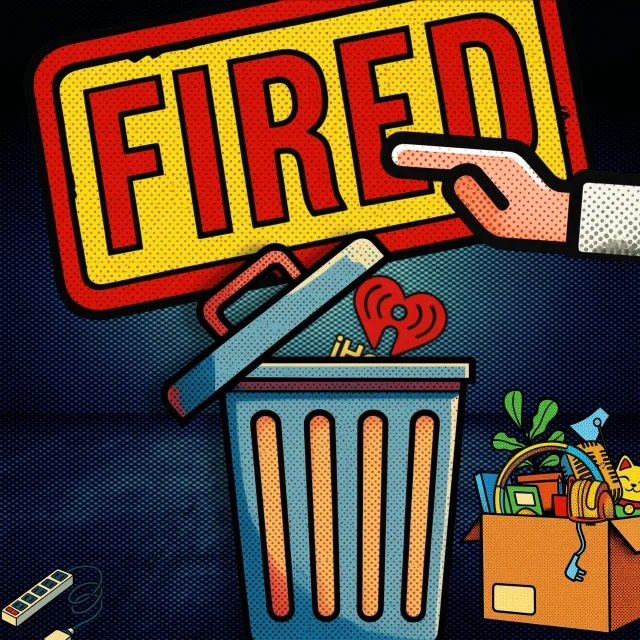
iHeartMedia just laid off hundreds of on air staff this week, wiping out local radio in markets like Springfield, Erie, and Spokane. Tyler traces how the 1996 Telecommunications Act opened the door for private equity to buy up stations, load them with debt, and strip out the people who actually made radio local. It's a case study in regulatory capture and what happens when infrastructure gets consolidated into a handful of hands, a warning for anyone who cares about digital ownership and consumer rights.
CHAPTERS
TRANSCRIPT — BONUS
So I got my first AM FM radio when I was maybe five years old Just a little thing man You toss a couple batteries in the back or plug it into the wall and that was it the whole world Came out of that that little speaker. I grew up in Tampa in the early 90s WFL Z WRB Q W XT B actually I got some of their stickers on the wall here. No WRB Q FLZ XDB on the Iraq I'd sit there Scan all over the dial. There was always there was always somebody on somebody live somebody local late at night, you'd find The the usual players
Art Bell talking about whatever was on You know, whatever was out there past the edge of the map if you will And it didn't matter what it was because the point was that a real person was awake and on the air and you could hear him obviously there wasn't cell phones or the internet or computers really but you know especially in the early mid 90s I've thought about that little radio I got way back then I've thought about it a lot this week This is the Tyler Woodward Project, and before I get any further, the usual spiel, this
is all me. My opinions, my point of view, nobody else's. Today, yes, I'm talking about iHeartMedia, the layoffs that started this week, and the thing that really I've been trying not to say out loud for a while now. Here's what actually happened, if you haven't heard yet. Starting Monday this week, iHeart began cutting on -air and programming staff across the country. By Thursday, it was
into the third day. And it's still going. Radio Insight, which has covered this stuff for years at this point, called it the biggest purge in the History of the industry That is their phrasing not mine And they don't you know, I don't think they throw that around lightly The number I heart will admit is it's in the dozens Well, the reporting on the ground says it's a lot more than a dozen or a few dozen Whole markets lost everybody I'm talking about like, you know Atlantic City Cedar
Rapids Erie for Colin Springfield, Missouri Spokane not trimmed. I mean completely cleared out every remaining local voice gone in a couple days Hell there's a guy in Springfield Clint Gerlich 19 years with the company He said something that is stuck with me. He said he was the only person who programs the radio in Springfield So there's nobody else there One person was the local radio in that town and now that person is gone Brett Saunders and Denver 28 years at KBCO Done. A
morning show in Fort Myers that ran almost 25 years, terminated. Mike Kelly at B -104 in, uh, what is it, Lehigh Valley? You know, on that station since 1993. These are the people who were the reason you turned it on. In the memo, you have to hear how they framed it. The two executives who sent it... said the goal is to quote move faster and operate with greater precision across markets unquote. Yeah, they said faster is better. They said they have built new tech capabilities over the last several years, and
now they are going to scale them. And then. And this is the part that actually made me put my head in my hands. The memo promises that guaranteed human stays at the core of everything they do Yeah guaranteed human in the same memo where they are firing the humans So let me tell you where I where I sit on this because I'm not just yelling from the outside I'm a broadcast engineer. I got my foot in the door back in 2014, finally.
I work in this every day and I feel it, man. Even where I am, things are tighter than they used to be. There's a sort of caution to everything now. A quiet thing where you don't dare rock the boat. You don't try the Weird idea you keep it running and you keep your head down. I Mean it's not as bad everywhere as it is at the big consolidators Public radio is a different animal and I'm Grateful for that. But the I mean the air pressure is the same everywhere Everyone
can feel which direction things are going So, I mean, why is it like this? Why did he get this way? Well, you can put a date on it. 1996. The Telecommunications Act. Before that, there were real limits on how many stations one company could own. After that, the cap basically came off. And the dial gap bought up Clear Channel, which is the company that later became iHeart, went from a few dozen stations to over a thousand.
A group of private equity firms took over Clear Channel. I mean, they took it private in 2006 for almost 19 billion dollars. That deal went bad, and the company filed for bankruptcy in 2018. People talk about private equity and housing right now. Like it's this new horror show. Wall Street buying up neighborhoods, stripping them, renting them back out to you. And I mean, that's bad, but radio got there first. Radio has been the test run. for that whole playbook for, I
don't know, some 20 -some odd years. Buy the thing, load it with debt, strip out the expensive parts, which in radio means to people, and run whatever's left on it on autopilot. And then a couple of months ago, back in April, the scare, I mean, all of this is kind of a scare but this one was really a little uh made you think for a moment you know bloomberg reported i heart and serious xm were in talks the merge yeah the biggest terrestrial radio company and the biggest
well really only satellite company possibly becoming one entity now Luckily, those talks stalled out by the end of May, but I mean, think about what that could have been. One company owning the AM dial, the FM dial and the satellite dial. Imagine what that does to the people who actually make radio, not the shareholders. I mean, the shareholders, they would have been thrilled. to everyone who ever mattered on air and not so much. Now, the one thing I've been trying
not to say out loud, I feel like I'm starting to lose my love for this. And I hate that. I genuinely hate saying that. I grew up really only ever wanting to do one thing. This was it, radio. Not TV, but radio. And there's a feeling I get more days, you know, than I really want to admit, especially lately, where I look at it honestly, and I think things might not be
coming back. Not the way it was at least do you want to know? What really makes this feel worse? Watch What's actually working right now? podcasting YouTube it's small creators one person with a mic and you know in the an opinion and Nobody's permission to do it That is the thing that's catching fire right now. That is the thing people are choosing a live or at the very least a personal voice that is clearly a human a human being who
I Guess actually cares which is you know Exactly the thing radio used to be The exact thing And the industry is sitting on the largest distribution network for live human voices ever built. And it's laying those voices off to hit a $50 million savings number while writing guaranteed human in a memo. I mean, give me a break. We're paralyzed. We are watching the answer go viral. on another medium, another platform. And we as an industry
can't make ourselves do it. I think about, you know, back when I was five years old with that little battery powered radio. The thing that that blew my mind back then wasn't the signal or how it all worked it was that someone was there you could plug in this device and hear somebody local in your town which felt way bigger than it was and then listening to the night guys like Art Bell I mean how many stations was he on I mean it was someone there someone was awake
and on the air local real You can automate a lot. You can not automate someone being there, a real human being. And this week, a few hundred people who were there get told, we don't need you anymore. You know, I sometimes think I should have been born like 10 years earlier. I missed the peak. of this thing I, you know, I've been given my life to. At least that's what I feel like. Maybe. I don't know. Or maybe the peak wasn't a year. Maybe it was just part of where
a real person was on the other end. And, you know, that part isn't gone, I guess. It just moved. I'm not ready to say it's dead, but... I'm not going to stand here and pretend it's fine either because it's definitely not. They got a whole lot smaller this week and somebody is making some money doing it. Subscribe to me. I am an independent creator. I may work in the industry, but I still love talking about the industry. My name is Tyler. And this is The Tyler Woodward Project. You can subscribe on Apple Podcasts, Spotify, and make sure you rate and
review the show. Follow me over on Facebook and YouTube at The Tyler Woodward Project. Instagram, threads, and blue sky. I'm over there at tylerwoodward .me. Reach out, say hello. Maybe you're one of those few that got told that you're no longer needed this week. I feel for you. I put a newsletter up on the new website too if you hear the join that going back to the original name that I called this podcast, Fully Modulated. You can subscribe to the Fully Modulated newsletter at tylerwoodward .me forward slash newsletter. That's going to do it for me. I just wanted to come on here and commiserate with you guys a little bit because
it's not good news. All right. That's going to do it for me for now.